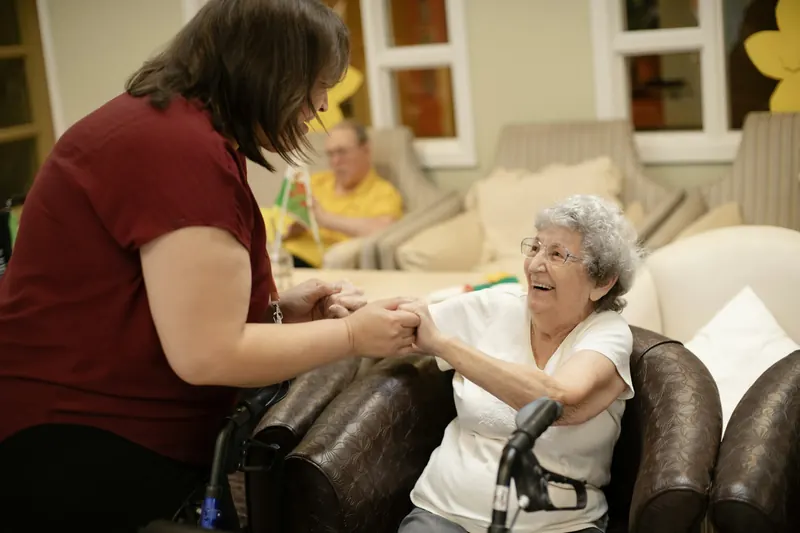
Grief is not something to fix, and big decisions in the first months are usually best avoided unless safety requires them. But it is also common for families to discover, after a death, how much the surviving parent relied on their spouse.
What to watch for
Watch for
- Weight loss, an empty refrigerator, or the same meal every day.
- Missed medications or unopened mail and bills.
- Not leaving the house, or not answering the phone.
- Memory problems that the late spouse had been covering for.
Support that helps now
What helps
Regular visits and calls at set times, meal delivery, a few hours a week of home care, and help with the medication routine can go a long way. A grief support group through a hospice or faith community can help too.

When a move is worth discussing
If loneliness is deep, memory problems are surfacing, or the house has become unsafe, a small board and care home can offer something an empty house cannot: people at every meal. Many residents eat better and talk more within weeks.
Let it be your parent's choice where possible, and start with a visit, not a decision.
Reviewed October 2, 2026. General information, not medical or legal advice. Talk with your loved one's doctor about their health.
Was this page helpful?
Thank you. If you still have a question, call us at (747) 210-9358.
Thank you for telling us. Call (747) 210-9358 and we will answer your question directly.